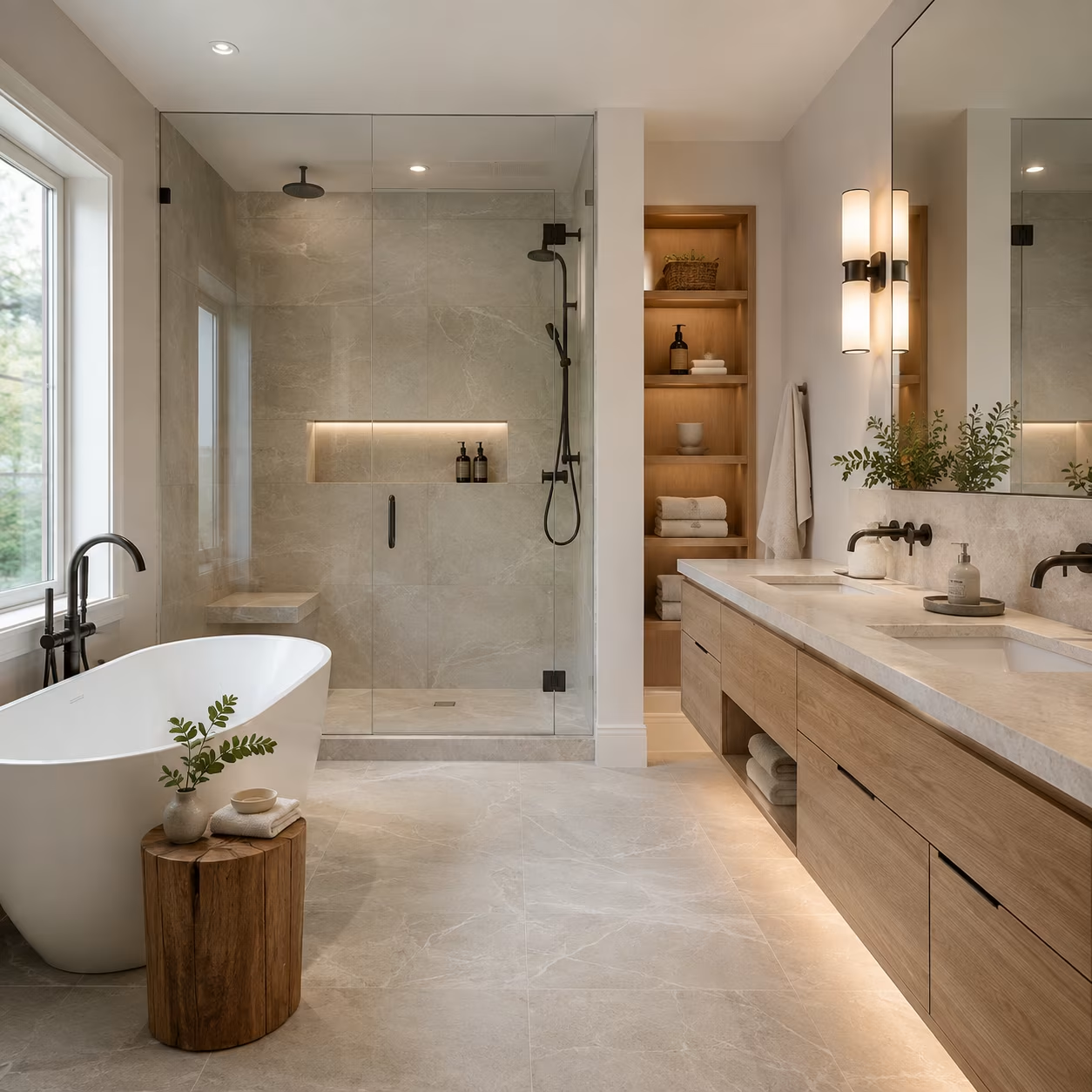
Bathroom terminology guide
By Calgary Home Remodeling & RenovationPublished Updated
In everyday Canadian conversation, people often say washroom when they mean a room with a toilet and sink, while bathroom is commonly understood to include a bathtub or shower. Usage varies by household and setting, so neither word is precise enough to define construction work on its own. A contractor needs a fixture list and plan, not only a room name.
The Government of Canada terminology database defines a bathroom as a room containing a bathtub or shower and usually a sink and toilet. Real-estate listings and renovation discussions also use terms such as half bath, full bath, powder room, ensuite, and three-piece bathroom. Those labels are useful shorthand, but drawings should show exactly what remains, moves, or is added.
How the terms are commonly used
Washroom is widely used in Canada for public facilities and residential toilet rooms, even when there is no bath. Bathroom more strongly suggests bathing facilities, especially in technical definitions, but speakers may still use it for any toilet room. Powder room usually means a small guest room with a toilet and sink. Ensuite describes location and access from a bedroom, not a guaranteed fixture count.
Why fixture counts matter for design
A toilet and sink require less area and different ventilation, waterproofing, drainage, and electrical planning than a room with a tub or shower. Adding bathing facilities may change plumbing routes, floor preparation, wall assemblies, lighting zones, and storage needs. When comparing proposals, make sure each one identifies fixtures, valves, accessories, tile extents, ventilation, cabinetry, mirrors, and painting so the scopes are genuinely comparable.
Plan for safety and accessibility
A useful bathroom balances clear movement with reachable storage and safe transfers. Consider non-slip flooring, even transitions, lighting without glare, blocking for future grab bars, lever hardware, and a shower entry that fits the intended users. CMHC guidance emphasizes durable, level, slip-resistant finishes and thoughtful contrast. These choices can benefit children, visitors, injured users, and aging household members without making the room feel institutional.
Write a scope that avoids ambiguity
Name the room for convenience, then document it precisely. Record existing and proposed fixture locations, whether plumbing moves, the type of tub or shower, waterproofing system, fan work, electrical changes, cabinet dimensions, finish selections, and owner-supplied items. Include assumptions about hidden conditions and permit responsibility. This detail prevents two people from agreeing to “renovate the washroom” while imagining very different finished rooms.